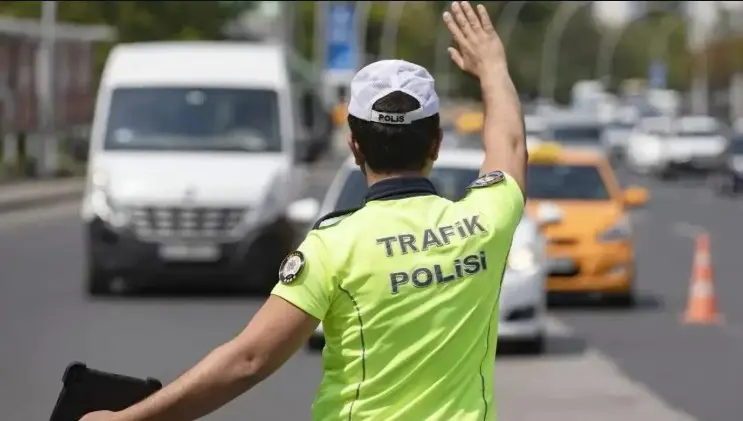
Within the scope of combating unregistered employment, social security controls are carried out in accordance with the Social Insurance and General Health Insurance Law No. 5510 and the Communiqué on Social Security Controls by Banks and Public Institutions and Obtaining Information and Documents from Organizations, Article 15. Traffic violation reports prepared by the General Directorate of Security (Emniyet Genel Müdürlüğü) are actively used for determining social security registration.
Traffic inspections result in administrative penalty reports that are served directly to the driver. These reports include vehicle license plate, driver’s full name, Turkish ID number, location of the penalty, province, district, unit, and date. This information is transmitted electronically to the Social Security Institution (SGK). According to the 2015/25 SGK Circular, under the section “Determination of Employment Start Dates,” the date on the report is considered the employment start date, and the driver may be registered as a social security insured.
This practice relies on the connection between the use of a commercial vehicle and the employment relationship. Accordingly, the driver of a commercially used vehicle is generally recognized as an employee of the company, unless the employer proves otherwise through a valid employment contract.
In cases of objection, the matter is first reviewed by the administrative penalty objection committee of the relevant SGK unit; if the committee cannot make a decision, the case may be referred to the audit unit.
Key considerations in the objection process and application:
If the commercial vehicle is rented and the driver is an employee of the owner company, objections should be submitted with rental agreements, invoices, and relevant documents.
If the driver is a spouse, family member, relative, close friend, or neighbor of the vehicle owner and the vehicle is used temporarily (hourly/daily) and exclusively for personal purposes, it must be demonstrated that no employment relationship exists with supporting evidence.
Even if a vehicle is registered as “commercial,” but the owner is not a taxpayer, the vehicle is not used for any commercial activity, or it is clearly used as a personal vehicle, no social security registration will be made based on the traffic report. In such cases, a formal petition should be submitted to SGK.
Potential consequences of registration based on traffic reports:
Administrative fines may be applied for drivers registered based on the report date.
Minimum wage support may be reclaimed.
According to Additional Article 14 of Law No. 5510, the company may lose eligibility for certain social security incentives.
These outcomes can create significant financial liabilities for both the company and the driver.
Therefore, it is critical to ensure that commercial vehicles are used only by relevant employees and prevent usage by unauthorized persons.
Recommended practices for risk management and compliance:
Monitor commercial vehicle usage through internal control processes and assign vehicles only to authorized personnel.
Regularly review traffic violation reports and ensure they are reconciled with SGK records.
Maintain proper documentation (contracts, usage records) for drivers claiming no employment relationship.
Submit objections to SGK with complete and accurate supporting documents, and seek legal advice when necessary.
In conclusion, this practice serves as a key tool in combating unregistered employment and requires companies to strengthen their social security compliance and risk management processes.